An experimental, individualized therapeutic cancer vaccine that uses messenger RNA (mRNA) to treat pancreatic cancer continues to show potential in a small patient group. Follow-up results from a phase 1 clinical trial show that nearly 90% of people whose immune systems responded to the vaccine were still alive up to six years after receiving the last treatment. The five-year survival rate for pancreatic cancer is around 13%, according to the American Cancer Society’s Cancer Statistics 2026 report.
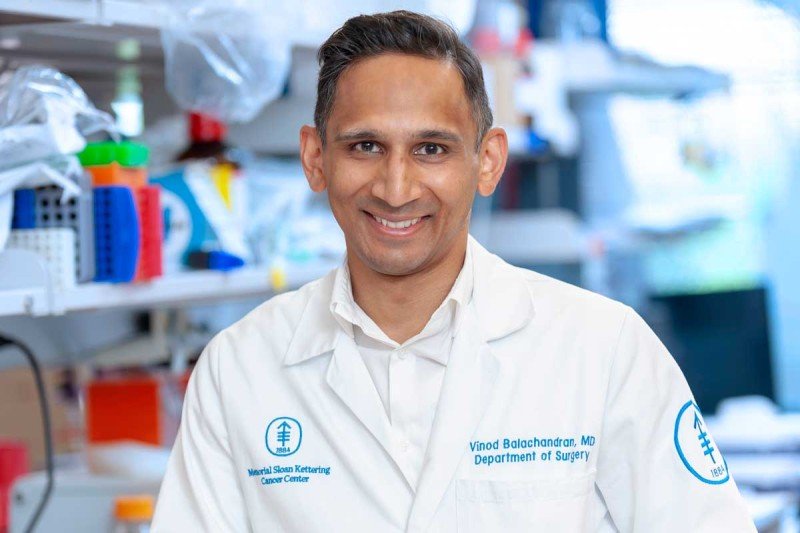
“These early results show this new immunotherapy approach has the potential to make a difference for one of the deadliest cancers,” says Memorial Sloan Kettering Cancer Center (MSK) physician-scientist Vinod Balachandran, MD, the trial’s principal investigator and Director of the Olayan Center for Cancer Vaccines at MSK (OCCV). “The latest data from this small study suggest vaccines can meaningfully stimulate the immune system in some patients with pancreatic cancer — and these patients continue to do well years after vaccination.”
The phase 1 study, led by Dr. Balachandran, was testing autogene cevumeran (BNT122, RO7198457), a therapeutic mRNA cancer vaccine that is being developed and researched by BioNTech and Genentech, a member of the Roche Group.
Dr. Balachandran presented the recent follow-up findings at the 2026 Annual Meeting of the American Association for Cancer Research (AACR).
A crucial part of the research involved detecting and tracking the immune system’s T cells that were activated by the vaccine. This effort was led by computational biologist Benjamin Greenbaum, PhD, Co-Director of the OCCV.
Clinical trial results for therapeutic mRNA vaccine for pancreatic cancer
In the phase 1 study, 16 patients received the autogene cevumeran vaccine after pancreatic cancer surgery, along with chemotherapy and an immunotherapy drug called a checkpoint inhibitor.
- Vaccines were custom-made for each patient based on the unique changes in the tumor DNA.
- In 8 of the 16 patients, the vaccine activated tumor-specific immune cells, meaning the vaccine taught the immune system to recognize tumor cells as foreign. This triggered the body to produce immune cells called T cells to target and kill the tumor cells.
- Of the 8 patients whose immune system responded to the vaccine, 7 (87.5%) were still alive 4 to 6 years after surgery.
- Among the 8 patients who didn’t respond, only 2 (25%) were still alive, with a median survival time of 3.4 years.
“The results are encouraging,” says Dr. Balachandran, a member of MSK’s Immuno-Oncology Program. “They fuel our efforts to test personalized mRNA vaccines in more patients and more cancers.”
Based on the phase 1 results, a global phase 2 clinical trial sponsored by Genentech in collaboration with BioNTech, is now testing autogene cevumeran in a larger patient group at MSK and other sites around the world.
The pancreatic cancer vaccine becomes a patient’s lifeline
Donna Gustafson was the first person to enroll in the autogene cevumeran trial in late 2019 — more than six years ago. She had been diagnosed at age 66 with pancreatic cancer when she and her husband, Ed, were visiting one of their three daughters in Australia.
“I was in shock, and my thoughts immediately went to my children,” she recalls. “We were saying to the doctor, ‘Are you sure? Did you come into the wrong room by mistake?’ But we were determined to do everything possible to beat this.”
They returned to the US and came to MSK for treatment. After meeting with surgeon Jeffrey Drebin, MD, PhD, Donna learned she was eligible for the new vaccine trial. Dr. Drebin, along with Dr. Balachandran and medical oncologist Eileen O’Reilly, MD, walked her through each step. First, her tumor would be removed with surgery and genetically analyzed to create a vaccine that would teach her immune cells to attack specific mutations present only in her cancer. After getting immunotherapy and the vaccine, she would receive standard chemotherapy.
“They described how they would take part of my tumor to make a personalized vaccine, and it sounded amazing,” Donna says. “My husband and I had a moment of concern about delaying chemotherapy, but all the doctors made me feel so comfortable that we took the leap of faith and said, ‘Go for it.’ ”
Over the next few months, Donna received an immunotherapy drug and eight doses of the vaccine, followed by chemotherapy, and then a final vaccine dose.
“The chemotherapy was hard on my body, but the vaccine had very little side effects, and they did not last long,” Donna says. “This was right at the beginning of Covid, which made it tricky staying safe while going back and forth for treatment, but MSK held my hand through the entire thing.”
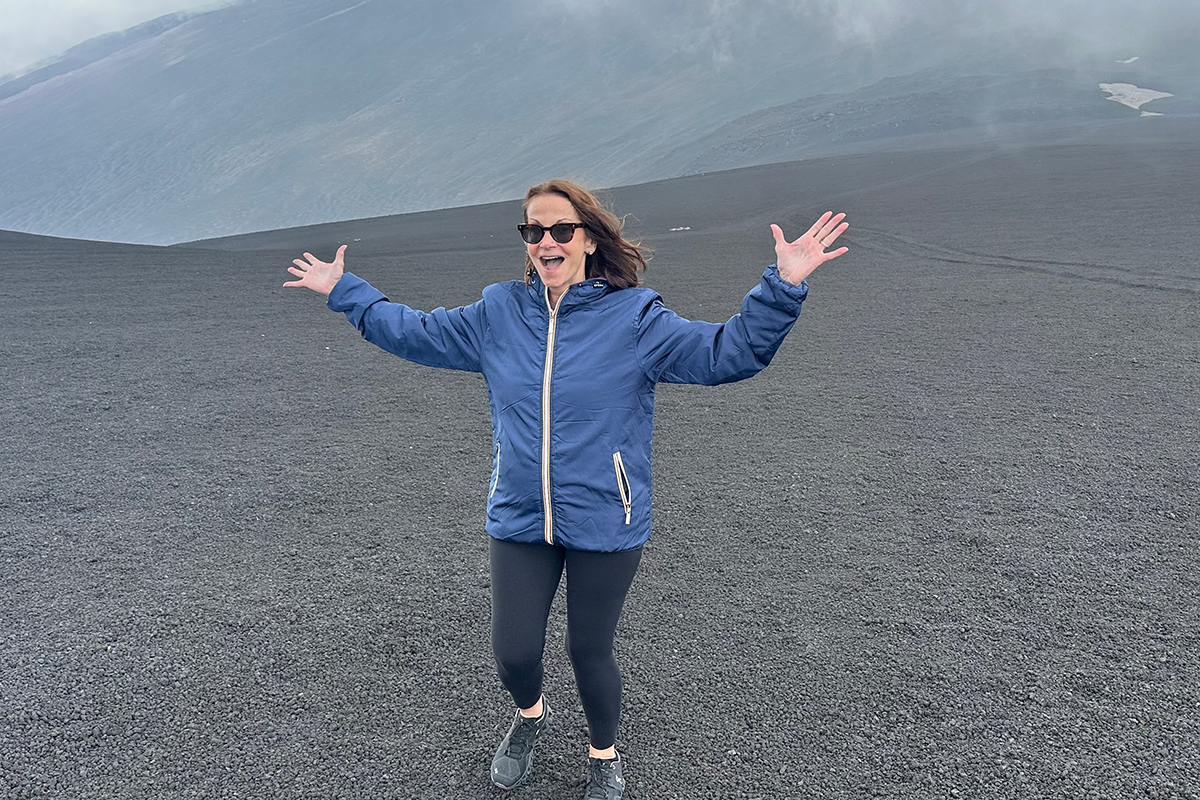
Today, Donna is 72 and living life to the fullest. She and Ed celebrated their 50th anniversary in Sicily last year, and they continue to travel extensively and spend time with their three daughters and six grandchildren.
“There’s no limitations on what I can do, so for me it’s absolutely been a miracle,” she says.
The challenge of treating pancreatic cancer with a vaccine
Pancreatic cancer is one of the deadliest cancers, even for patients whose tumors can be removed with surgery. It is the third leading cause of cancer-related death in the U.S. and is expected to climb to the second leading cause in the coming years. Standard treatments such as chemotherapy, radiation, targeted therapy, and current immunotherapies have been largely ineffective against the disease, so new approaches are urgently needed.
The difference between a therapeutic and preventive vaccine
Therapeutic cancer vaccines are designed not to prevent cancer but to stop it from progressing or coming back. In this way, they differ from vaccines used to prevent infections such as the flu and other outside pathogens. Therapeutic cancer vaccines are challenging to develop because cancer cells are the enemy within: A person’s own cells are turning against them and growing out of control. Therefore, cancer vaccines must teach the immune system how cancer cells differ from the rest of the body.
Activating the immune system against cancer
Instead of a short-term boost to help the immune system fight cancer, therapeutic cancer vaccines aim to “train” it to recognize and attack cancer cells more precisely and long-term. However, it has remained uncertain whether vaccines could be effectively designed to target and treat notoriously difficult cancers like pancreatic cancer.
“Designing cancer vaccines isn’t simple — it requires a systematic approach to select the right targets on each patient’s tumor and get the immune system to respond strongly and keep fighting over time,” Dr. Greenbaum says. “This is much harder than it sounds, especially in cancers where other immunotherapies have failed.”
In their analysis of the immune response in vaccinated patients, the researchers found that those who responded to the personalized mRNA vaccine had CD8+ T cells — cancer-killing immune cells that lasted up to six years and showed no signs of slowing down.
Not only that, these patients produced other important immune cells called CD4+ T cells. Scientists believe that an effective cancer vaccine needs to activate both of these cell types — CD8+ T cells to directly attack cancer cells and CD4+ T cells to boost and sustain the immune response for a stronger, longer-lasting effect.
“As we continue to learn more about how these vaccines work, there is a real belief and determination in the pancreatic cancer community that we can effectively treat this disease by training the patient’s own immune system,” Dr. Balachandran says. “But continued progress requires continued research and testing.”
Developing ready-to-use vaccines for cancers with KRAS mutations
Separately, MSK researchers are testing a vaccine that’s ready-made for patients whose pancreatic cancer is caused by mutations in the KRAS gene. (KRAS mutations are a driving force in many cancers.) These vaccines could be mass-produced and stored for immediate use.
Results from a phase 1 trial testing the KRAS-targeting vaccine, called ELI-002 2P, co-led by Dr. O’Reilly, show that the vaccine helps some patients live longer without the cancer returning. A phase 2 trial, led by Dr. O’Reilly and surgical oncologist Kevin C. Soares, MD, is expected to open in 2026 and will test this vaccine in a larger patient group.
Relief after a pancreatic cancer diagnosis that came out of nowhere
Another patient in the phase 1 trial, Donald Sarcone, is relishing the extra years he has been given. A certified public account on Staten Island, he was diagnosed in 2020 after his wife and daughter noticed he had turned yellow and insisted he get checked out. An endoscopy revealed a pancreatic tumor was blocking his bile duct. (The symptoms of pancreatic cancer often aren’t noticed until the disease has begun to harm other organs, another reason it is so deadly.)
“It was surreal at first,” he says. “I was thinking, ‘I’m only 60, I play tennis, I ride my bike, I take vitamins, I go to the doctor if I so much as sneeze.’ It came out of nowhere.”
Donald chose MSK for treatment, saying he “preferred to wake up from surgery in a place that only took care of cancer patients.” When he and his wife, Fran, met with Dr. Drebin and learned he would be a perfect candidate for the clinical trial, he didn’t hesitate.
“I just said, ‘Where do I sign? I need all the help I can get,’ ” he recalls.
Donald had the surgery within a week and received the first vaccine dose a few months later. Like Donna, he found the chemotherapy that followed to be tougher than the vaccine and immunotherapy. But Donald found ways to break up the monotony of chemotherapy appointments. Instead of sitting around while waiting for blood test results, he would step out to nearby Bloomingdale’s department store for a bit of impromptu shopping.
“I would tell them, ‘If I’m not back right away, I must have found too many shirts to try on,’” he says.
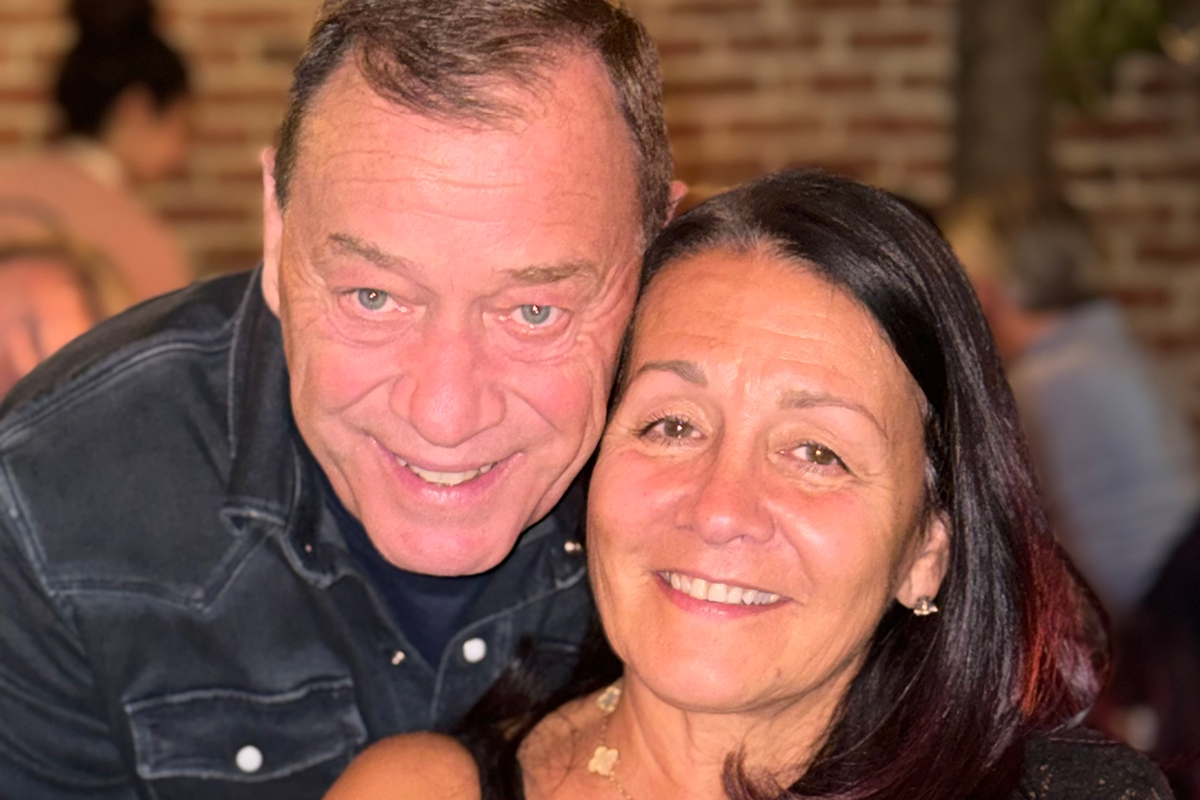
With a sense of humor and a positive outlook, he finished treatment in mid-2021 and quickly resumed an active life. Now 67, his regular checkups show no sign the cancer has returned — more than five years since his diagnosis. He continues playing tennis once a week and enjoys traveling and visiting children and grandchildren.
“Some days, I forget what I went through because I’m healthy and I’ve moved on with my life,” he says. “I don’t do a lot differently other than count my blessings every day because I’m a really lucky guy.”
The history of the phase 1 trial in pancreatic cancer
Dr. Balachandran says a vaccine to treat one of the deadliest cancers is the result of many discoveries over the past decade.
Focusing on why some people survive
A decade ago, Dr. Balachandran decided to focus on a glimmer of hope among pancreatic cancer patients: A small subset managed to beat the odds and survive. He wondered what made them different.
His team analyzed the tumors taken from the survivors and saw the tumors had an especially large number of immune cells in them, particularly T cells. He surmised that something in the tumor cells seemed to be sending out a signal that alerted the T cells and drew them in to attack the cancer.
Discovering the proteins that launch an immune response
Dr. Balachandran found that these signals were unique proteins called neoantigens. When tumor cells divide, they accumulate genetic mutations, which in turn produce the neoantigens. These neoantigens can be recognized by T cells as being foreign, which triggers an immune system attack.
“In most people with pancreatic cancer, these neoantigens are not detected by immune cells, so the immune system does not perceive the tumor cells as threats,” he explains. “But we saw that neoantigens in the long-term pancreatic cancer survivors were different — they did not escape notice. They, in effect, uncloaked the tumors to T cells, causing the T cells to recognize them.”
The researchers were surprised and encouraged to learn that the neoantigen-recognizing T cells continued to circulate in the blood of these rare patients for up to 12 years after the pancreatic tumors had been removed by surgery. The T cells had memory of the neoantigens as a threat.
These findings about immune protection in long-term pancreatic cancer survivors were published in Nature in November 2017.
Developing the first mRNA vaccines for pancreatic cancer
The scientists needed a way to deliver neoantigens to patients as vaccines. They were particularly interested in vaccines that use mRNA, a piece of genetic code that could instruct cells in the body to make a protein that might trigger an immune response.
Dr. Balachandran contacted Professor Uğur Şahin, MD, co-founder and CEO of BioNTech. He and his team were working with Genentech on individualized neoantigen-based mRNA immunotherapy approaches to treating multiple solid tumors. In late 2017, Dr. Balachandran flew to Germany for a meeting with BioNTech to discuss the potential of therapeutic mRNA cancer vaccines for pancreatic cancer — as well as the possible use of the mRNA technology they had developed.
Creating the vaccines for the phase 1 trial
Tumors from patients in the phase 1 trial were shipped to BioNTech in Germany. They were genetically sequenced to look for up to 20 mutations that have the highest likelihood to produce neoantigens that look most foreign to the immune system. The company then designed and manufactured the individualized cancer vaccine candidate, which was then sent back to New York. The vaccine was then infused into the patient’s bloodstream.
Moving therapeutic cancer vaccines forward
Research continues to seek new insights into the immune system in an effort to make vaccines that work better against pancreatic and other deadly cancers. Findings like those reported by Dr. Balachandran at AACR may help guide further research and development.
Because cancer vaccines are still largely restricted to trials of drugs produced by pharmaceutical companies to be tested in a few hospitals for limited types of cancers, MSK is also working to expand access to trials by creating the capacity to develop and manufacture other mRNA vaccines in-house.
The Olayan Center for Cancer Vaccines at MSK is dedicated to helping accelerate the testing of promising vaccines for pancreatic and similarly deadly, difficult-to-treat cancers. The OCCV is establishing mRNA vaccine manufacturing infrastructure in Manhattan to enable on-site production and delivery of personalized vaccines for patients with a variety of cancers.
“At MSK, we have the resources and the freedom to ask the most challenging questions, and tackle them full on,” Dr. Balachandran says. “I’ve chosen to focus not on why people don’t survive, but rather on why they live — and how their own immune system could be their secret weapon.”
Key Takeaways
- Pancreatic cancer has a five-year survival rate around 13% and is difficult to treat.
- An investigational vaccine called autogene cevumeran shows potential for reducing the risk of pancreatic cancer returning after surgery.
- In a small phase 1 study, 7 of 8 patients who responded to the vaccine were still alive 4-6 years after treatment.
- A phase 2 clinical trial is testing the vaccine in a larger patient group.
This story was originally posted in July 2023 and has been updated.
Dr. Balachandran is the Hutham S. Olayan and Robert F. Raucci Chair.
Dr. O’Reilly is the Winthrop Rockefeller Endowed Chair of Medical Oncology.
Dr. Drebin is the Scott M. and Lisa G. Stuart Chair.
Dr. Balachandran is Director of the Olayan Center for Cancer Vaccines at MSK and a member of the Immuno-Oncology Program at MSK.
The phase 1 clinical trial was sponsored by Memorial Sloan Kettering Cancer Center.
The phase 2 clinical trial is sponsored by Genentech, Inc.
The phase 1 clinical trial and biomarker studies were funded by imCORE, Genentech, BioNTech, Stand Up To Cancer, the Lustgarten Foundation, the Ben and Rose Cole Charitable PRIA Foundation, and the National Cancer Institute Pancreatic Cancer Microenvironment Network.
Dr. Balachandran reports honoraria and research support from Genentech, research support from Bristol Myers Squibb, and honoraria from AbbVie and Merck Research Laboratories.
Drs. Balachandran and Greenbaum report patent applications for related work on antigen cross-reactivity, tracking vaccine-expanded T-cell clones, and neoantigen quality modeling.
Dr. Greenbaum has received honoraria for speaking engagements from Merck, Bristol Myers Squibb, and Chugai Pharmaceuticals; has received research funding from Bristol Myers Squibb, Merck, and ROME Therapeutics; and has been a compensated consultant for Darwin Health, Merck, PMV Pharma, Shennon Biotechnologies, Synteny, and Rome Therapeutics, of which he is a co-founder.
The Olayan Center for Cancer Vaccines at MSK receives support from The Olayan Charitable Foundation, the FORTH Foundation, and MSK trustee Hutham Olayan, and The Tow Foundation.


